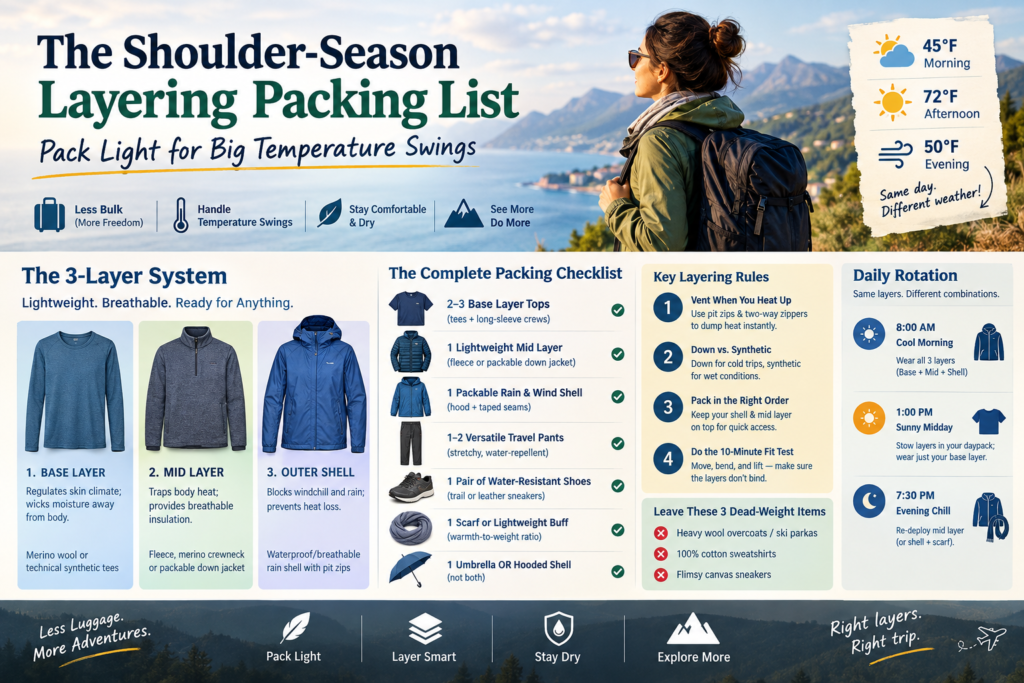
Key Takeaways: The Minimalist Layering System
- Systems Beat Bulk: Shoulder-season temperatures can swing 25°F to 35°F in a single day. The solution is not packing a heavy suitcase, but building an interlocking 3-layer system that breathes and compresses.
- The Dead-Weight Rule: Heavy winter parkas and paper-thin linen summer fabrics are dead weight. A lightweight packable down jacket combined with a breathable rain shell covers 95% of shoulder weather.
- Fabric Synergy Matters: Moisture-wicking merino wool or technical synthetics prevent sweat accumulation under rain shells during active sightseeing.
- The Pre-Zip Gut Check: If you cannot name the exact layer combination that handles your destination’s typical daily low and daily high, pause and adjust before zipping your bag.
Shoulder-season weather is defined by dramatic intra-day volatility. A crisp, 45°F (7°C) morning can transform into a sunny 72°F (22°C) afternoon, followed by sudden coastal breezes and a chilly 50°F evening. Packing separate bulky outfits for every conceivable temperature leads to overstuffed luggage and travel fatigue.
The secret to effortless off-peak travel is packing a cohesive three-layer capsule system. Rather than packing for individual days, you pack a modular set of garments that mix, match, and vent to handle whatever conditions emerge.
The 3-Layer Technical Architecture
The Complete Shoulder-Season Packing Checklist
- 2–3 Base Layer Tops: A strategic mix of short-sleeve tees and long-sleeve crews in odor-resistant merino wool or quick-dry blends.
- 1 Lightweight Mid Layer: A breathable microfleece pullover or a packable ultralight down jacket that compresses into its own pocket.
- 1 Packable Rain & Wind Shell: Features an adjustable hood and taped seams to block sudden coastal squalls and chilly mountain drafts.
- 1–2 Versatile Travel Pants: Stretchy, water-repellent chinos or technical travel trousers with enough room to wear thermal leggings underneath if cold snaps hit.
- 1 Pair of Water-Resistant Walking Shoes: Comfortable, treated leather sneakers or trail shoes capable of tackling wet cobblestones and damp hiking paths.
- 1 Compact Scarf or Lightweight Buff: Provides unmatched warmth-to-weight ratio around your neck or head during brisk mornings.
- 1 Compact Umbrella OR Hooded Shell: Never pack both; an adjustable, peaked shell hood eliminates the need to carry an umbrella.
4 Unspoken Rules of Effective Layering
1. Mechanical Venting Is Crucial
No waterproof membrane breathes as fast as a human sweating while climbing uphill. Choose an outer shell with underarm “pit zips” and two-way front zippers so you can dump heat instantly without removing your jacket in the wind.
2. Down vs. Synthetic Mid Layers
For late autumn or high-latitude trips, swap a light fleece for a packable down jacket. High-fill down offers superior warmth-to-weight, packing into the size of an apple inside your daypack when afternoon sunshine peaks.
3. Top-of-the-Bag Packing Order
Never bury your rain shell or mid layer beneath base layers in your main luggage. Pack them directly at the top of your bag or inside your external daypack pocket so you can access warmth or rain protection in 10 seconds flat.
4. The 10-Minute At-Home Fit Test
Before departing, put on all three layers simultaneously at home: base tee, mid fleece, and outer shell. Move your arms and bend down. If your shell binds tightly across your shoulders or compresses the mid layer, the system will not trap warm air.
The Daily Rotation: How to Wear It Across 24 Hours
Wear all 3 layers (Base + Mid + Shell) to block brisk morning winds while walking to transit.
Stow outer shell and mid layer in your daypack; sightsee comfortably in just your breathable base layer top.
Re-deploy your mid layer (or shell + light scarf) for outdoor dinner strolls as temperatures drop rapidly after dark.
Leave These 3 Dead-Weight Items at Home
- Heavy Wool Overcoats / Ski Parkas: They weigh 4 pounds, consume half a carry-on suitcase, and are unwearable when afternoon temperatures climb above 60°F.
- 100% Cotton Sweatshirts: Cotton absorbs perspiration and body moisture, stays damp for hours, and dries painfully slowly in hotel bathrooms.
- Flimsy Canvas Sneakers: Canvas offers zero water resistance. Step in one cold autumn puddle and your feet will remain cold and wet for the rest of the day.
Frequently Asked Questions (FAQ)
1. How many outfits do I need for a 7-day shoulder-season vacation?
You only need 3 to 4 base layer tops, 1 or 2 mid layers, and 1 outer shell. By rotating your base tops and washing one in the sink mid-week, you can easily travel for a full week with a single carry-on bag.
2. Why is merino wool preferred over cotton for shoulder season?
Merino wool naturally regulates body temperature, retains insulating power even when damp, resists odor for days of repeated wear, and breathes far better than synthetic or cotton fabrics.
3. Can I use a windbreaker instead of a waterproof rain shell?
A windbreaker is sufficient for arid destinations (like the desert southwest). However, for coastal, maritime, or temperate destinations, a seam-sealed waterproof rain shell with an adjustable hood is essential to prevent windblown rain from penetrating your warm mid layer.
4. What is the single most versatile accessory for shoulder season?
A lightweight wool scarf or buff. It weighs less than 2 ounces, packs down to nothing, and can instantly seal in warmth around your collar when chilly morning or evening breezes pick up.