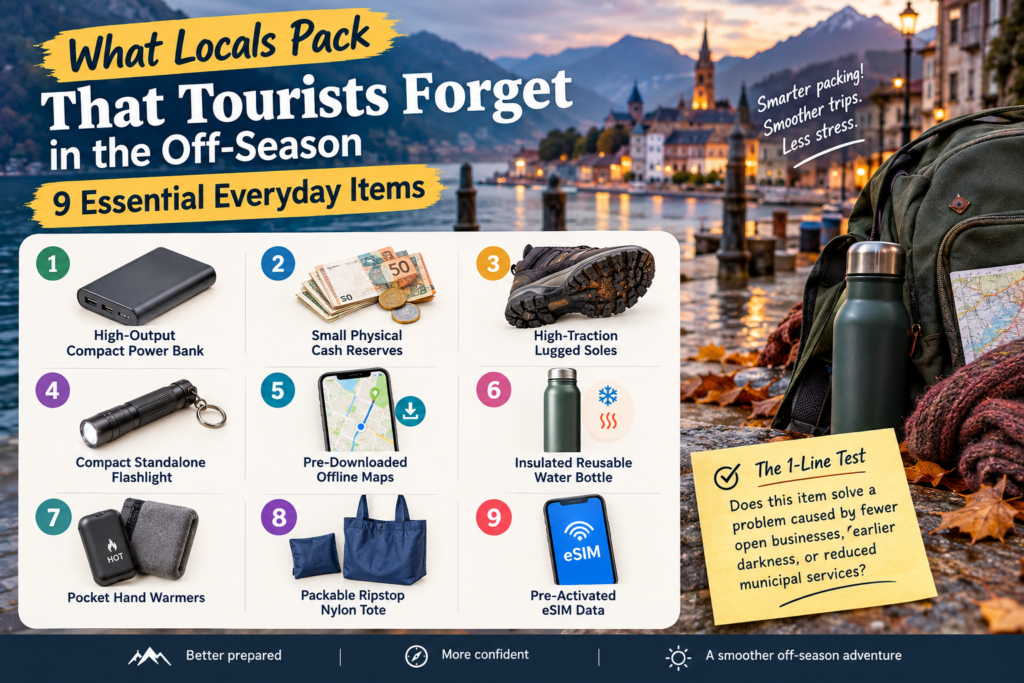
Key Takeaways: Small Items That Save Big Frustrations
- Infrastructure Solvers, Not Clothing: Standard packing guides focus only on jackets. Locals carry small items that solve for earlier darkness, closed visitor centers, and reduced public services.
- The Cold Battery Drain: Lower temperatures cut smartphone battery life by 30% to 50% while shorter daylight forces heavy flashlight and GPS navigation use. A compact power bank is mandatory.
- The Cash-Only Shift: Family-run seaside and mountain bistros often switch to cash-only off-season to eliminate credit card processing fees during low foot-traffic months.
- Traction Over Waterproofing: Damp, decomposing autumn leaves and wet historic cobblestones make rubber grip far more important than waterproofing alone.
Most travel packing checklists are written with peak-season assumptions quietly baked in: bright daylight until 9:00 PM, fully staffed visitor information desks, universal contactless credit card payments, and open street kiosks on every corner. When you visit during shoulder or off-peak months, several of those conveniences quietly vanish.
People who live in shoulder-season destinations year-round do not navigate the season with bulky arctic gear; they carry small, lightweight everyday items that bypass off-peak operational gaps. Packing these nine practical items prevents minor seasonal frictions from derailing an otherwise memorable trip.
Peak Tourist Habits vs. Off-Season Local Realities
The 9 Essential Items Locals Carry in the Off-Season
1. High-Output Compact Power Bank
Lithium smartphone batteries degrade rapidly when ambient temperatures drop below 50°F (10°C). Between searching offline transit tables, shooting low-light photos, and navigating unlit streets, your battery will hit 10% hours earlier than it would in July.
2. Small Physical Cash Reserves
Do not rely 100% on Apple Pay or credit cards. When tourist crowds thin out, smaller family-owned bakeries, seasonal ferries, and rural taxis disable card terminals to avoid monthly terminal leases and merchant fees. Keep $50–$100 in local notes handy.
3. High-Traction Lugged Soles
Waterproof shoes keep your socks dry, but they won’t keep you on your feet. Historic European stone plazas, marble stairs, and woodland paths accumulate wet autumn leaves and morning frost. Deeply siped rubber outsoles (like Vibram) are essential.
4. Compact Standalone Flashlight
In smaller off-season coastal villages and rural towns, municipal street lighting is frequently dimmed or turned off early to conserve town budgets. A small, keychain-sized 300-lumen flashlight illuminates broken cobblestones without draining your phone’s battery.
5. Pre-Downloaded Offline Maps
Visitor information booths commonly close in October. Download city maps and transit zones on Google Maps or Organic Maps before you depart your hotel Wi-Fi so you never find yourself stranded in the dark without navigation.
6. Insulated Reusable Water Bottle
In summer, open drink stands and corner bodegas are everywhere. In shoulder season, roadside kiosks close up shop. Carrying an insulated bottle filled with warm tea or clean drinking water prevents long searches for an open beverage spot.
7. Pocket Hand Warmers
Locals know that waiting 25 minutes for an unsheltered regional bus or commuter train in 48°F damp wind feels vastly colder than walking continuously. Slipping reusable or air-activated hand warmers into your jacket pockets restores comfort instantly.
8. Packable Ripstop Nylon Tote
With fewer tourist convenience stores operating, you will be shopping at neighborhood bakeries and local grocers alongside residents. Having an ultralight packable shopping bag in your pocket eliminates disposable plastic bag surcharges and awkward juggling.
9. Pre-Activated eSIM Data
Airport telecom counters that stay open until midnight in peak summer frequently operate with skeleton staffing or early closures off-season. Installing and activating a digital eSIM on your smartphone before boarding ensures instant cellular data upon landing.
The 1-Line Test for Off-Season Packing
To determine whether an accessory genuinely belongs in your shoulder-season daypack, ask yourself:
If it only addresses generic cold weather, treat it as a standard layering choice. If it solves an infrastructure gap, it is an essential local tool.
How to Ask Locals for Unvarnished Advice
If you have direct contact with your Airbnb host, a boutique innkeeper, or a local tour guide, never ask broad questions like “What should I pack?” You will only receive a generic weather forecast.
Instead, send this specific query:
This phrasing bypasses standard fashion advice and surfaces localized insights—such as a specific mosquito hatch, a ferry coin requirement, or sudden coastal wind tunnels.
Frequently Asked Questions (FAQ)
1. Is cash really still necessary in developed European countries?
Yes. While capital cities are virtually cashless, regional countryside bakeries, family trattorias, mountain refuges, and seasonal island ferries frequently impose minimum card spend limits or switch to cash-only during slow off-season months to protect margins.
2. Why does sole traction matter more in shoulder season than peak summer?
In summer, heavy tourist traffic grinds dirt away and keeps walking surfaces dry. In autumn and spring, reduced foot traffic combined with decaying wet leaves, morning frost, and damp cobblestones creates slick hazards that smooth summer sneakers cannot grip.
3. Why not just use a smartphone flashlight instead of carrying a separate torch?
A smartphone flashlight consumes massive battery power. If your phone is already struggling in 45°F air, using the torch while navigating unlit streets for 30 minutes can drain your remaining charge completely, leaving you with no map and no light.
4. How should I pack these items without adding luggage weight?
All nine items combined weigh less than 1.5 pounds and fit into a single small packing cube or the exterior pocket of your daypack. They eliminate stress without adding noticeable bulk to your carry-on.