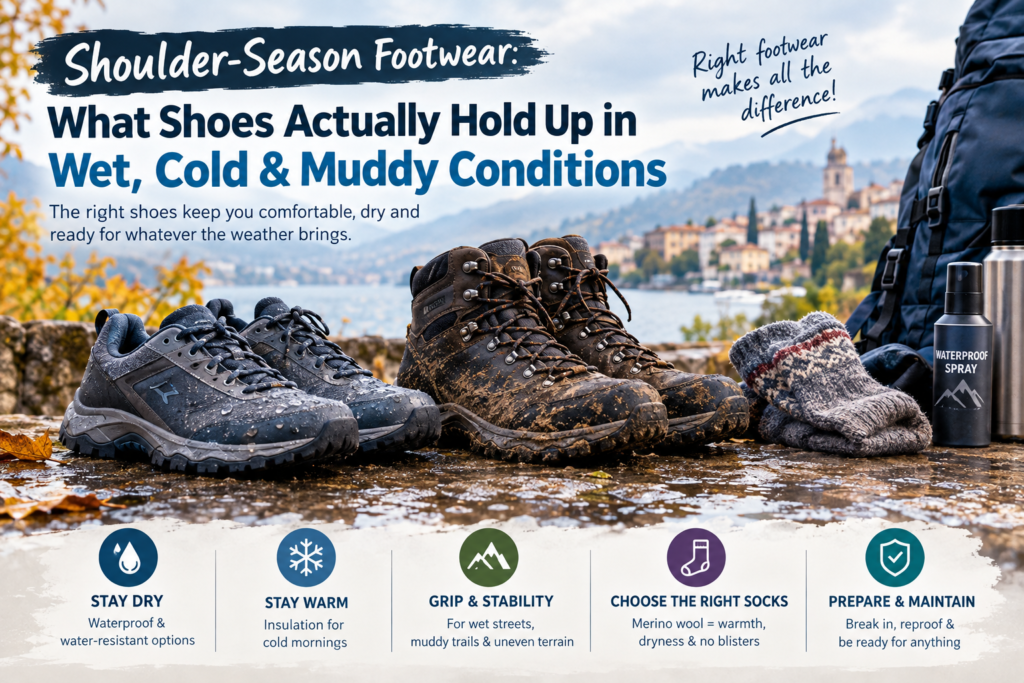
Key Takeaways: Ground-Level Footwear Truths
- The Fastest Point of Failure: Bad footwear punishes you faster than any other packing error. Cold morning puddles, slick wet leaves, and uneven stone plazas transfer straight to your feet within 30 minutes.
- Match Terrain, Not Season: Urban cobblestone trips need cushioned, water-resistant sneakers. Rural, unpaved, or muddy trail routes are the only itineraries that truly justify heavy waterproof hiking boots.
- Socks Are 50% of the Equation: Cotton socks absorb sweat, stay damp for hours, and cause blisters. Merino wool hiking socks regulate temperature and dry rapidly.
- The 3-Week Break-In Rule: Never take a brand-new pair of waterproof shoes on vacation. Break them in over 2 to 3 weeks of daily wear before departure to eliminate blister hotspots.
Footwear is the single packing category where shoulder season shows no mercy. While an imperfect jacket might leave you feeling slightly cool, the wrong shoes guarantee wet socks, frozen toes, sore arches, and painful blisters. The defining feature of off-peak travel—unpredictable weather shifting between morning frost, afternoon sun, and damp evening rain—hits your feet before anywhere else.
The biggest mistake travelers make is applying summer footwear logic (canvas sneakers or lifestyle sandals) to autumn and spring itineraries. Selecting the right shoes requires auditing your actual ground terrain, upgrading your sock fabrics, and maintaining waterproofing treatments before your flight.
Footwear Performance by Shoulder-Season Condition
4 Rules for Comfort in Unpredictable Conditions
1. The Cobblestone Cushion Factor
European old towns and historic stone plazas punish paper-thin soles. Walking 8 miles across uneven cobblestones stresses arch muscles and ankle joints. Choose footwear with torsional midsole rigidity and substantial rubber cushioning over minimalist barefoot shoes.
2. The Merino Sock Multiplier
Never wear cotton socks in shoulder season. When morning dew or light rain penetrates your shoe, cotton stays wet for 12 hours, guaranteeing blisters. Merino wool socks wick moisture away, insulate even when damp, and can be worn for 2 to 3 days without odor.
3. Renew Your DWR Spray
Even premium Gore-Tex shoes lose their factory Durable Water Repellent (DWR) coating over time, especially along flex creases near the toes. Spray a \$12 silicone or fluoropolymer waterproofer onto your clean shoes three days before departure to restore full water beading performance.
4. The 3-Week Break-In Period
Stiff waterproof membranes and leather collars require flexing to mold to your heel. Put at least 20 to 30 miles on your travel shoes around your hometown before packing them. Discovering a heel rub 4,000 miles from home turns sightseeing into an ordeal.
The Overnight Hotel Shoe-Drying Hack
If you get caught in a downpour and water seeps into your footwear, follow this rapid drying routine:
- Remove the Insoles: Take out the removable footbeds immediately and lay them flat.
- The Paper Wick Technique: Loosely ball up newspaper or hotel tissue paper and stuff it firmly into the toe boxes. The porous paper wicks interior moisture out in roughly 3 to 4 hours. Replace once soaked.
- Never Cook Your Shoes: Place shoes near a gentle heater or in front of an air fan, but never directly on a hot radiator. Extreme heat melts sole glue and shrinks leather.
Avoid the ‘One-Pair’ Trap on Rainy Routes
While traveling with a single pair of shoes is the minimalist holy grail, it becomes a liability if multiple rainy days are forecast. Even top-tier waterproof footwear can let water in over the ankle cuffs during sustained downpours.
The Solution: Wear your supportive, water-resistant primary walking shoes on the plane. Pack one lightweight, low-profile lifestyle sneaker inside your bag as a dry backup to wear out to dinner while your primary shoes dry overnight.
Frequently Asked Questions (FAQ)
1. Are heavy waterproof hiking boots overkill for a shoulder-season city trip?
Yes. Stiff high-top mountain boots add unnecessary weight, tire your shins on flat concrete, and look out of place in European restaurants. For paved city trips, treated water-resistant leather sneakers or low-cut trail-walking shoes offer the ideal balance.
2. Do sandals ever make sense for shoulder-season travel?
Only for tropical destinations with warm, dry shoulder seasons. For Mediterranean, European, or mountain shoulder seasons, sandals leave your feet exposed to sudden cold rain, puddles, and grit.
3. Why does coastal salt spray ruin shoes faster in the off-season?
Autumn and spring coastal winds blow salt-heavy mist onto promenades. Salt crystals dehydrate leather and corrode metal eyelets. Rinse shoes with warm tap water and a damp cloth after beach walks to extend their lifespan.
4. How many pairs of merino wool socks should I pack?
Pack three pairs of midweight merino wool socks. Because merino naturally resists odor, you can rotate two pairs over several days while having one fresh pair on standby, covering a full week-long itinerary with ease.