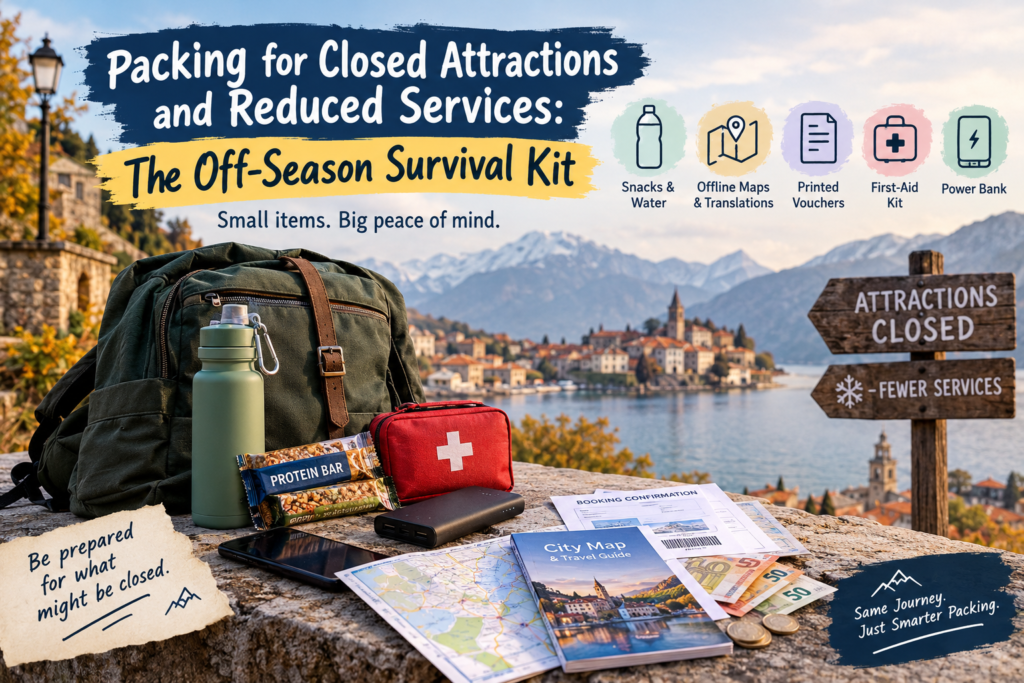
Key Takeaways: Solving for Disappearing Conveniences
- Infrastructure Over Weather: Packing for shoulder season is not just about staying warm or dry. It is about compensating for closed visitor centers, shuttered trailhead cafes, and unstaffed transit ticket booths.
- The Self-Sufficiency Kit: A collapsible water bottle, compact protein bars, a pocket first-aid kit, and offline downloaded maps cover 90% of off-season operational gaps without adding luggage bulk.
- Printed Backups Are Vital: When rural tour operators run skeleton staffs, showing a physical printed reservation confirmation avoids arguing over spotty cellular connections or dead smartphone batteries.
- Avoid the Over-Correction Trap: Do not pack heavy picnic baskets or survival gear. Solve for service reductions with itinerary flexibility and extra time buffers rather than heavy luggage.
During peak summer travel, modern tourism infrastructure provides an invisible safety net: an open cafe on every street corner, staffed visitor kiosks distributing free maps, public restrooms maintained every hour, and taxis waiting at every landmark. When the high season ends, that safety net quietly scales back.
Packing for reduced services does not require dragging a survivalist backpack across Europe or North America. It simply requires acknowledging that casual peak-season conveniences cannot be taken for granted. By packing a few small, targeted everyday items in your daypack, you can navigate reduced schedules and shuttered kiosks with complete peace of mind.
Peak-Season Assumptions vs. Off-Season Realities
The 5-Item Minimalist Service-Gap Kit
1. High-Energy Pocket Rations
Keep two dense protein or nut bars tucked into your daypack. When an expected historic castle cafe or seaside bistro turns out to be seasonally closed, you can curb hunger comfortably without cutting short your afternoon exploration.
2. Offline Translation & Maps
With fewer tourist help desks operating, you will be interacting directly with local residents. Download your destination’s offline language dictionary on Google Translate alongside your offline navigation maps before heading out.
3. Printed Hard-Copy Vouchers
Off-season tour operators frequently operate with a single staff member at the desk. Having a crisp physical printout of your booking and payment confirmation prevents delays caused by spotty cellular connections or dead phone batteries.
4. Pocket Comfort First-Aid Kit
Pharmacies in smaller off-peak towns often shut down early on weekdays and remain closed throughout the weekend. A ziplock bag containing blister bandages, ibuprofen, antacids, and throat lozenges saves you from hunting for an open emergency chemist.
5. Portable 10,000mAh Power Bank
Earlier darkness means you will rely on your smartphone for flashlight illumination, timetable lookups, and GPS tracking far more than during summer. A lightweight battery pack guarantees you never get stranded in the dark.
Regional Closure Nuances: What Actually Shuts Down
Different geographies experience service reductions across completely different channels:
- Coastal Resort Towns: Beach umbrella vendors, open-air seafood shacks, passenger ferries, and public beach shower blocks close entirely. Grocery stores and inland bakeries remain open.
- Mountain & Alpine Villages: High-elevation cable cars shut for annual maintenance; alpine mountain huts close; valley bus routes drop from every 20 minutes to twice daily.
- Major Metropolitan Cities: Very few outright business closures. However, major museums drop their summer late-night opening hours, and historical ruins enforce strict 3:30 PM last-entry cutoffs.
Avoid the ‘Over-Correction’ Packing Trap
It is easy to panic and overpack for every possible closure: packing a full mess kit, a thermal thermos, multiple guidebooks, and backup clothing. That turns your daypack into an exhausting 15-pound anchor.
The Rule: Only pack small, multi-use items that weigh under a few ounces. Solve larger service gaps through itinerary flexibility—building 30-minute buffer breaks into your afternoon and verifying tomorrow’s museum schedule the night before.
The 15-Minute Pre-Departure Closure Audit
One week before departure, spend 15 minutes reviewing the official websites of your top three non-negotiable attractions:
- Check current operating days (many transition to closed Mondays AND Tuesdays).
- Confirm the exact last-entry admission cutoff time (often 60–90 minutes prior to closing).
- Confirm whether online advance ticketing is still required or if walk-ins are permitted off-season.
Frequently Asked Questions (FAQ)
1. How can I confirm if an attraction has reduced shoulder-season hours?
Always check the attraction’s official website or recent Google Maps listing within 7 to 10 days of your trip. Avoid third-party travel blogs, which frequently quote outdated peak-season summer schedules.
2. Why is carrying cash more important when services are reduced?
Independent, family-run restaurants and rural transport operators that remain open during slow seasons often disable electronic payment terminals or impose minimum purchase requirements to avoid card merchant fees.
3. Is a physical paper map really necessary in the smartphone era?
A printed paper map or a pre-downloaded offline vector map is essential because seasonal tourist information kiosks close early, and cold weather can rapidly deplete your phone’s battery while navigating.
4. What should I do if an iconic attraction on my itinerary is unexpectedly closed?
Always plan an indoor secondary backup (such as a local winery tasting, historic library, or thermal bath) for each day. Shoulder-season travel rewards flexibility over rigid check-the-box sightseeing.