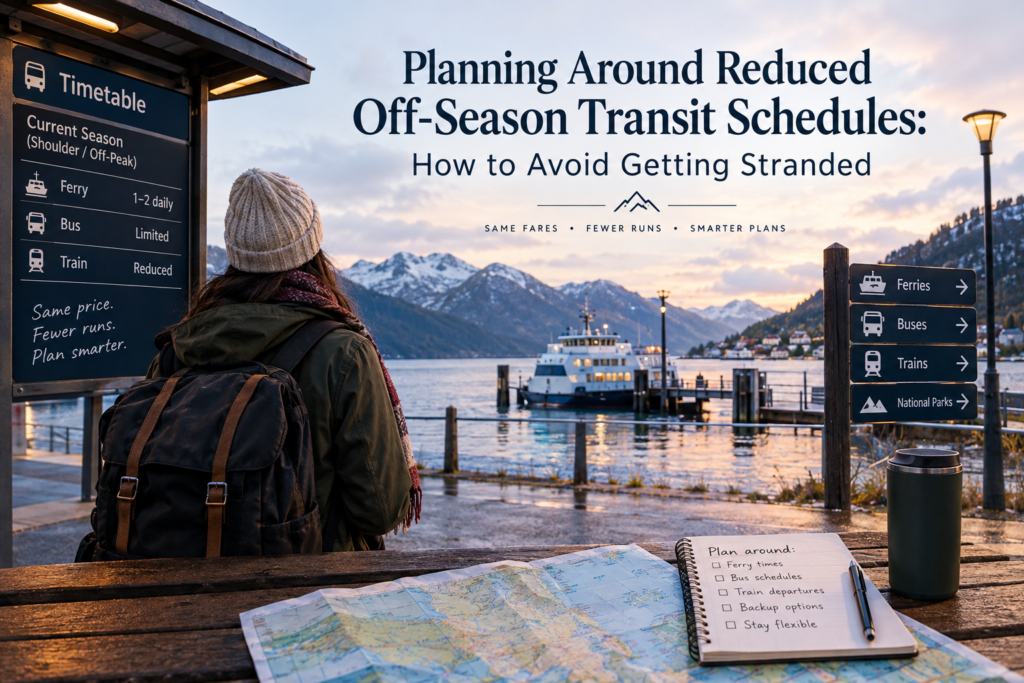
During shoulder and off-peak travel windows, regional transit fares rarely change. Public train, bus, and ferry pricing is primarily set for everyday residents, which keeps ticket costs stable throughout the year. The actual disruption lies in service frequency. When passenger volume falls off after peak season, operators cut schedules aggressively—turning what seems like a simple route into a logistical bottleneck if you plan using summer assumptions.
📌 Key Takeaways: Shoulder-Season Transit Realities
- A flexibility issue, not a cost issue: You will not pay more for transit tickets, but missing a single connection can cost you an entire travel day.
- Ferries and tourist shuttles are cut first: High operating costs cause operators to slash island sailings from multiple daily runs to just one, while dedicated park shuttles often suspend completely.
- Pass math breaks down: Multi-day unlimited transit passes are marketed around high-frequency usage. On reduced timetables, individual pay-per-ride tickets are often significantly cheaper.
- Build around transit, not activities: Lock in departure times for once-daily connections first, then build lodging, sightseeing, and meals around that scaffolding.
What Services Actually Get Cut First?
Transit authorities scale down services systematically based on route profitability and rider demographics. Commuter rail serving metropolitan workers usually holds steady, while recreational and peripheral routes face severe reductions:
The Critical Danger of Misreading Seasonal Timetables
One of the most frequent travel mistakes outside summer is misreading transit timetables. Operators frequently host both high-season and shoulder/winter schedules on the exact same webpage or PDF document without bold visual dividers.
Furthermore, the exact changeover date rarely sits on a clean calendar month boundary. A regional operator might transition from summer to autumn frequency on the second Sunday of September or the third Monday of October depending on local staffing allocations. If you rely on a printed chart or a saved screenshot from three months prior, you risk standing at an empty platform waiting for a train that stopped running weeks ago. Always visit the carrier’s primary native website within seven days of travel to confirm which column applies to your exact date.
Strategic Framework: How to Build a Transit-First Route
When schedules contract, typical itinerary planning must be inverted. Here are the four foundational strategies seasoned off-season travelers use to prevent missed connections:
1. Anchor the Day to Fixed Departures
Do not list your desired activities and attempt to fit transit into the gaps. Determine the one or two departures available for your long-distance bus or ferry, make those non-negotiable anchor points, and fit museums, meals, and check-outs around them.
2. Recalculate Multi-Day Pass Value
Regional 3-day or 7-day travel passes assume peak departures where travelers hop on multiple routes per day. With reduced schedules, you will rarely take enough daily trips to break even. Calculate the sum of point-to-point tickets before purchasing tourist cards.
3. Double the Buffer on Water Crossings
Ferries are subject to seasonal weather cancellations in addition to thin schedules. If catching a ferry is required to reach an airport or an onward train connection, never book the final sailing of the day. Always treat the second-to-last departure as your target.
4. Brief Your Travel Companions
In peak season, missing a 9:00 AM train means hopping on the 9:30 AM. In shoulder season, missing it means waiting until 3:45 PM. Make sure everyone in your group understands the schedule context so leisure breakfasts do not inadvertently blow up the entire day’s plan.
⚠️ The Single-Departure Contingency Check
Before starting any route with only one scheduled run per day, ask one simple question: “If this vehicle fails to arrive or we miss the boarding gate, what is our immediate backup?” Know whether a regional rideshare exists, whether a local bus company runs an inland detour, or if you will need to book an extra hotel night in that hub. Answering this in advance eliminates high-stress panics on the road.
Frequently Asked Questions
How far in advance do operators release their off-season timetables?
National rail networks typically publish timetable revisions 30 to 60 days ahead. However, smaller regional operators, private ferry lines, and rural shuttle providers frequently update schedules just two to three weeks before the season shift. Re-checking schedules one week prior to travel is strongly advised.
Can a rental car be used as a last-minute backup if transit schedules are too tight?
While rental cars offer total flexibility, regional rental offices also scale back during shoulder months. Smaller airport or downtown depots frequently reduce branch operating hours, close entirely on Sundays, and carry smaller vehicle fleets. If you anticipate needing a car, secure the booking in advance rather than expecting same-day desk walk-ins.
What should I do if a seasonal transit route is completely suspended?
When scenic railways or express tourist shuttles pause for the winter, look for year-round commuter alternatives. Mainline local trains or municipal village buses often cover the same general corridor, albeit with more stops. Alternatively, pre-booking a shared regional minivan transfer can bridge the gap without the cost of a long-distance private taxi.
Do weekend transit schedules differ drastically from weekdays outside peak season?
Yes. In many rural and secondary tourist zones, public transport drops to skeleton staffing on weekends because local commuter traffic disappears and there are not enough visitors to justify regular departures. Always verify Sunday and holiday timetables specifically when arranging cross-region transfers.