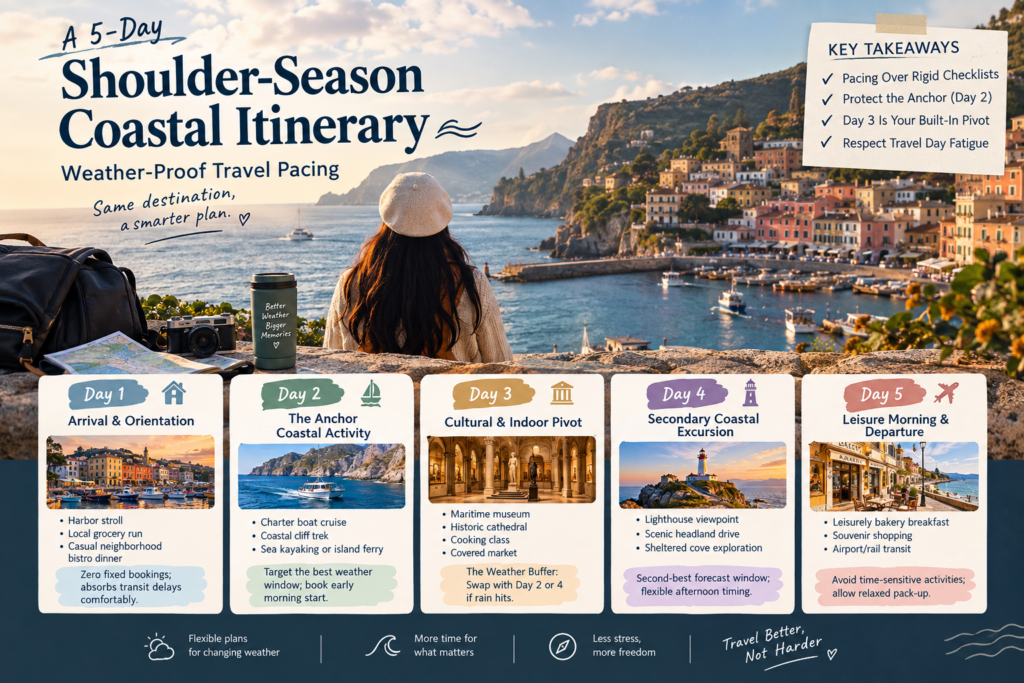
Key Takeaways: Pacing Over Rigid Checklists
- The Flexible Skeleton: Coastal shoulder season brings volatile weather patterns. Rather than fixing strict daily tour times, structure your trip around interchangeable outdoor and cultural modules.
- Protect the Anchor (Day 2): Place your primary weather-dependent excursion (boat tour, coastal cliff hike) on Day 2. This leaves a 48-hour buffer to reschedule if a front rolls through.
- Day 3 Is Your Built-In Pivot: Designate Day 3 for indoor cultural sights (wine cellars, historic forts, museums) that are rewarding in their own right, but can easily swap with outdoor days.
- Respect Travel Day Fatigue: Never schedule time-sensitive tours on Day 1. Flight delays, rental car queues, and early autumn sunsets eat into arrival day daylight rapidly.
Planning an off-peak coastal trip requires a completely different pacing mindset than summer travel. In July, you can schedule outdoor beach days back-to-back with 15 hours of guaranteed daylight and warm evenings. In shoulder season—early spring or mid-autumn—coastal weather arrives in multi-day patterns: clear, crisp sunny spells alternating with gusty maritime squalls.
The solution is not abandoning your itinerary, but adopting an elastic 5-day pacing template. This framework separates what to do from how to sequence it, allowing you to slide outdoor excursions into prime forecast windows while keeping travel stress-free.
The 5-Day Strategic Coastal Master Schedule
The Logic Behind the 5-Day Sequence
1. Day 1: The Low-Stakes Arrival Buffer
Delayed flights, slow rental car desks, and early 5:30 PM autumn sunsets ruin tightly scheduled arrival days. Keeping Day 1 free of non-refundable reservations ensures that a travel delay does not cost you a headline sightseeing experience.
2. Day 2: The Anchor Activity Placement
Placing your signature coastal activity on Day 2 creates a safety net. If a marine squall or gale warning cancels the morning boat tour, you still have Day 3 and Day 4 remaining to reschedule with the operator before heading home.
3. Day 3: The Modular Weather Pivot
Day 3 is not an uninspired “rainy day backup.” By planning an authentic, high-value cultural immersion (like touring a historic fortress or visiting seaside cellars), you enjoy a rewarding day regardless of weather, while retaining the freedom to swap it with Day 2.
4. Evening Transitions: Warmth First
Coastal breezes drop nighttime temperatures fast. Breezy summer waterfront cocktail decks will be uncomfortably cold or closed. Plan dinners in cozy, enclosed historic taverns or heated indoor spaces rather than assuming summer patio vibes.
Working Backwards from Your Anchor Activity
Your Day 2 highlight (e.g., a boat tour or coastal ridge walk) requires more than just “no rain.” Before finalizing dates, verify these four operational constraints:
- Wind Speed & Direction: Coastal ferry and boat operators cancel sailings if swell exceeds 2 meters, even on radiant sunny days.
- Tidal Timing: Sea cave explorations and tidal beach walks require low tide; confirm low tide coincides with daylight hours.
- Reduced Timetables: Off-peak ferries often drop from hourly departures to just two runs daily. Confirm return schedules explicitly.
- Flexible Rebooking: Book directly with local operators who offer 24-hour weather cancellations rather than non-refundable third-party aggregators.
Adapting the Template for Shorter or Longer Routes
The 3-Day Compressed Weekend
Day 1: Afternoon arrival + harbor walk.
Day 2: Anchor outdoor excursion booked for the morning; indoor museum afternoon.
Day 3: Scenic coastal lookout drive + departure.
The 7-Day Extended Route
Do not simply add 2 more outdoor days. Shoulder-season storms arrive in multi-day bands. Structure a 7-day trip as two 3-day alternating modules (Outdoor → Indoor/Cultural → Outdoor), leaving Day 4 completely unreserved as a floating weather cushion.
Worked Real-World Example: Early October Coastal Trip
- Day 1 (Arrival): Arrive at 2:00 PM; check into seaside guesthouse; stroll the fishing harbor; enjoy fresh seafood stew in a cozy heated tavern.
- Day 2 (Anchor): Forecast shows crisp, clear 62°F (17°C) sunshine; take the 9:00 AM scenic cliff-path hike to a remote lighthouse; pack lunch.
- Day 3 (Cultural): Morning coastal drizzle; tour the 16th-century coastal fortress and maritime gallery; enjoy a leisurely 2-hour wine tasting.
- Day 4 (Secondary Nature): Sky clears in the afternoon; rent e-bikes to explore quiet sandy coves and coastal headlands; sunset harbor photography.
- Day 5 (Departure): Fresh pastries at a local bakery; relaxed souvenir shopping; midday departure flight.
Frequently Asked Questions (FAQ)
1. Should I book weather-dependent coastal tours months in advance?
No. In shoulder season, tour boats rarely sell out weeks ahead. It is far better to wait until 4 to 5 days before your trip when local maritime forecasts are accurate, or book directly with operators that allow 100% free same-week date swaps.
2. What if continuous bad weather hits the entire 5-day trip?
The built-in Day 3 indoor/cultural module guarantees at least one great day. In the rare event of a multi-day coastal low-pressure system, pivot to regional culinary tours, indoor thermal baths, historic artisan workshops, and dramatic storm watching from a fireside lounge.
3. Why should I contact my hotel or host 7 days before arrival?
Local guesthouse hosts provide real-time updates that weather apps miss: whether local ferry schedules recently shifted to winter timetables, which harbor restaurants are taking autumn holidays, and current sea water temperatures.
4. Can I swim in the ocean during shoulder season?
In early autumn (September/October), ocean water retains summer heat and is often pleasant for swimming. In spring shoulder season (April/May), water is at its annual coldest, meaning swimming usually requires a short neoprene wetsuit.