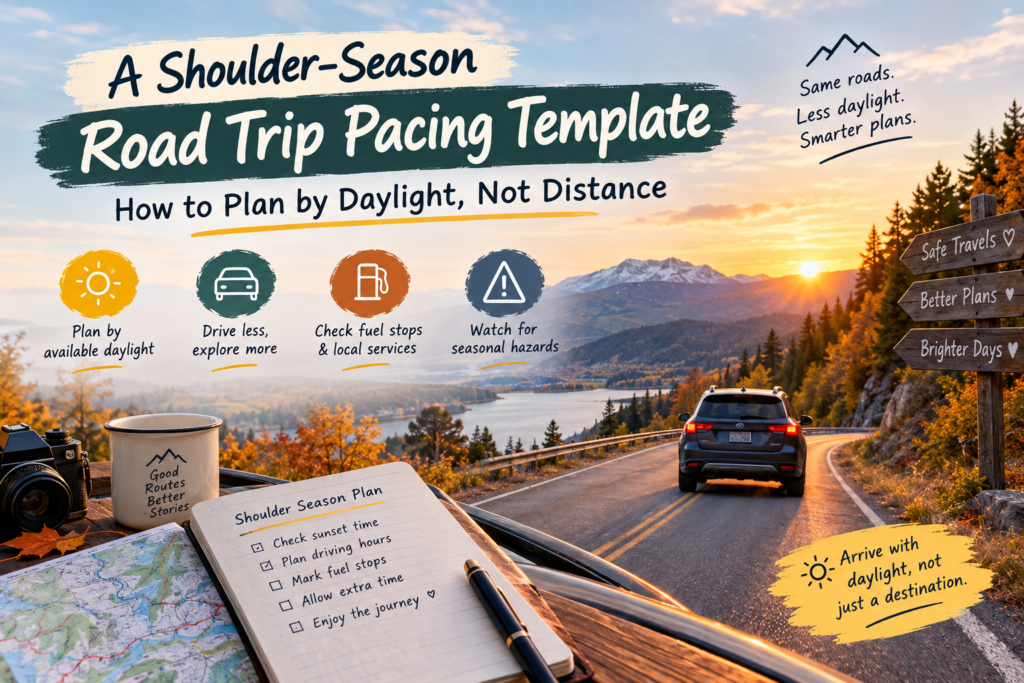
A road trip schedule that feels effortless under mid-summer skies can quickly turn disastrous during shoulder season. In peak summer, 15 to 16 hours of daily sunlight provide an enormous safety cushion—you can drive 400 miles, take multiple spontaneous detours, and still pull into your hotel well before dusk. In the shoulder months, usable daylight contracts by 25% to 35%. Applying a summer driving pace to an autumn or early spring itinerary frequently results in navigating unfamiliar, unlit rural roads in pitch darkness with closing fuel stations and locked guesthouse doors.
🚗 Key Takeaways: Shoulder-Season Road Trip Pacing
- Plan by available daylight, never by map distance: Set sunset as your absolute arrival deadline, then calculate how many driving and sightseeing hours fit comfortably inside that window.
- Cut daily wheel time by 25–35%: Drop long highway transfer legs from 7–8 hours down to 4–5 hours maximum to guarantee safe daylight arrival.
- Arriving early is safety, not scenery: Rural gas stations, repair garages, and local dining frequently shutter at dusk during off-peak months. Arriving after dark leaves you with zero local assistance.
- Audit fuel stops for year-round operation: Seasonal roadside depots often close for the winter; identify confirmed 24/7 highway hubs before tackling remote stretches.
The Shoulder-Season Daily Pacing Template
When calibrating your route, categorize each travel day by its primary purpose and apply these realistic driving limits:
Four Underestimated Road Hazards in Shoulder Season
Beyond the sheer reduction in daylight hours, shoulder season alters the physical driving surface in ways that summer travelers rarely account for:
1. Wet Fallen Leaves
During autumn, decaying damp leaves form a slick, gel-like film over rural tarmac. Braking distances increase drastically—especially on shaded curves, descents, and under dense canopy where roads never completely dry out during the day.
2. Microclimate Black Ice
Even when ambient afternoon temperatures read 10°C (50°F), cold air settles in shaded valley hollows and elevated bridge overpasses. Early morning and dusk road surfaces can freeze invisibly hours before the valley town registers freezing temperatures.
3. Seasonal Fuel Station Closures
In rural scenic corridors, many independent gas stations operate on a seasonal tourist schedule. Do not let your fuel tank drop below a third; identify verified year-round regional filling stations along your route before departure.
4. The “Unfamiliar Route” Multiplier
Driving on unfamiliar, winding secondary roads naturally slows your pace. Factor in navigation checks, unlit intersections, and slower speeds around agricultural equipment or wildlife moving at dusk.
⚠️ The Rural Check-In Trap: Why Arriving After Dark Fails
In major cities, hotels have 24-hour staffed lobbies. In off-peak countryside inns, B&Bs, and guesthouses, reception desks often lock up at 6:00 PM or 7:00 PM. Arriving after dark in a closed village means hunting for obscure key-safes with a flashlight, finding local restaurants already closed for dinner, and having no one available if keycards malfunction. Treat daylight arrival as your hard operational deadline.
The 5-Minute Morning Route Audit
Before starting the engine each morning, spend five minutes running this three-point safety check:
- Check Specific Pass Statuses: Look at local transportation department feeds for high-elevation road passes. Snow flurries or rock clearing can close mountain links without triggering general weather alerts.
- Confirm Midpoint Fuel & Coffee Stops: Pinpoint one verified year-round town midway through your route rather than relying on spontaneous roadside signs.
- Lock in Your Target Sunset Arrival: Check today’s local sunset time at your destination. Subtract 90 minutes from that time—that is your non-negotiable arrival target.
Frequently Asked Questions
How much should I reduce daily driving time in shoulder season compared to summer?
Plan for 25% to 35% less behind-the-wheel time per day. If you comfortably handle 7 hours of driving on a July vacation, cap your shoulder-season transit days at 4.5 to 5 hours. This absorbs earlier sunsets, slower road speeds, and mandatory daylight arrival margins.
Do rental cars in shoulder season come equipped with winter or all-season tires?
Not automatically. Unless required by regional law (such as parts of Germany, Austria, or mountain zones), standard rental fleets often retain summer highway tires well into late autumn. If your itinerary climbs into high passes or crosses frost-prone zones, specifically request all-season or winter tires with M+S ratings when reserving.
How can I tell if a rural fuel station is open year-round?
Do not rely solely on automated map listings, which often reflect peak-season operating hours. Look for major national chain brands, stations co-located with 24/7 automated card payment terminals, or stations situated directly along primary freight and commuter highways.
Is GPS navigation reliable for drive-time estimates during shoulder season?
GPS apps calculate drive times assuming dry pavement at posted speed limits. They do not account for wet leaf slip, reduced visibility in dusk fog, cautious mountain driving, or seasonal construction work. Always add 15 to 30 minutes of padding for every two hours of estimated rural driving.