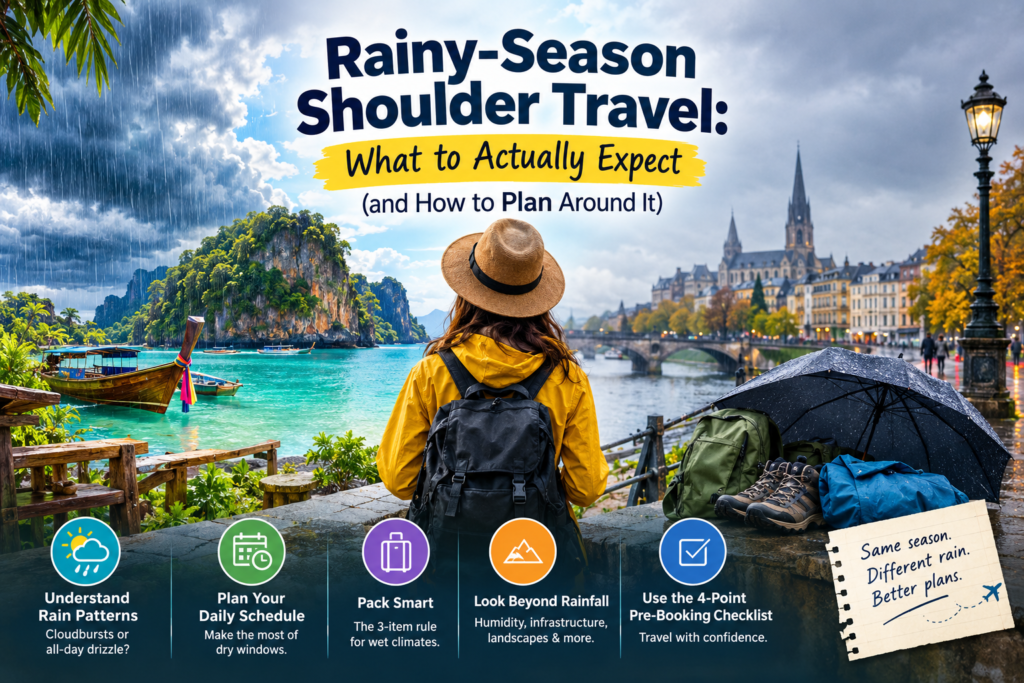
Key Takeaways: Deconstructing Rainy Shoulder Travel
- Two Opposing Rain Profiles: Tropical shoulder seasons feature 30-minute convective cloudbursts followed by brilliant sun. Temperate shoulder seasons bring persistent, low-intensity drizzle that dampens entire days.
- The Metric That Matters: High rainfall totals with few rainy days indicate short, manageable downpours. Low rainfall totals spread over 20 rainy days indicate unrelenting gray skies.
- The 3:00 PM Storm Rhythm: In tropical zones, storms build predictably through afternoon heat. Schedule outdoor excursions for crisp mornings and reserve late afternoons for covered markets or museums.
- The Visual Dividend: Rainy shoulder seasons deliver the absolute lowest crowd levels, steepest hotel discounts, and spectacular vibrant landscapes for photography enthusiasts.
Encountering rain in a shoulder-season forecast is often treated as an immediate deal-breaker. However, a generic “rainy” label conceals two completely different meteorological realities. A torrential 30-minute tropical thunderstorm creates a temporary pause in a sunny afternoon, whereas a persistent, 12-hour autumn drizzle in Western Europe fundamentally changes how you experience a city.
Rather than canceling plans based on a weather icon, travelers should investigate the underlying precipitation mechanics. By understanding whether rain arrives as quick convective cloudbursts or continuous overcast drizzle, you can pack appropriately, optimize your daily sightseeing hours, and capture some of the steepest flight and accommodation discounts of the entire year.
Short Downpours vs. All-Day Drizzle: How to Plan
Harnessing the Daily Clockwork Storm Pattern
In tropical and subtropical shoulder seasons, precipitation rarely arrives at random hours. As morning solar heating warms the earth, convective moisture accumulates, almost reliably breaking into thunderous afternoon downpours between 2:30 PM and 5:00 PM, before clearing entirely by sunset.
The Itinerary Hack: Schedule strenuous outdoor hikes, temple visits, and boat excursions between 7:30 AM and 1:00 PM. Retreat indoors for a relaxed long lunch, a museum tour, or a spa treatment during the 3:00 PM cloudburst, and step back outside into freshly cooled, clear air for dinner.
4 Factors to Evaluate Beyond Rainfall Volume
1. The Humidity Multiplier
Rainfall volume alone does not determine comfort. Warm air with 90% ambient humidity feels far more exhausting than a cool drizzle in 55°F air. In humid wet seasons, leave heavy synthetic rain slickers at home; prioritize breathable, quick-drying linen and moisture-wicking athletic fabrics.
2. Ground Infrastructure Resilience
A modern city like Tokyo absorbs torrential typhoon downpours with zero subway disruption. Conversely, a rural island with unpaved dirt roads can turn into an impassable mud slick during a modest storm. Research how destination roads and public transit hold up in wet weather.
3. Visual & Landscape Payoffs
For landscape photographers and nature lovers, rainy shoulder seasons offer unmatched beauty. Cascading waterfalls flow at maximum volume, terraced rice paddies glow vibrant green, and atmospheric low-hanging mist creates dramatic, moody photography without tourist crowds.
4. The 2-Week Departure Recheck
Monsoon arrival dates and autumn rain belts can advance or retreat by 10 to 14 days year to year. Recheck live meteorological satellite radar two weeks prior to flying to confirm if the season is running uncharacteristically early, late, or right on historical average.
The 4-Point Pre-Booking Wet Travel Checklist
- Pattern Verification: Does the destination experience quick 30-minute cloudbursts or continuous all-day gray drizzle?
- Predictable Daily Windows: Is there a clear morning dry window to complete your primary outdoor activities?
- Activity Viability: Does the primary reason you are traveling (e.g., scuba diving, mountain hiking, museum exploring) remain safe and enjoyable in the rain?
- Footwear Readiness: Do you own comfortable, broken-in water-resistant walking shoes that prevent wet socks and blisters?
Packing Light for Wet Climates: The 3-Item Rule
Never pack five different heavy coats or rubber rain boots. You can master rainy shoulder travel with three versatile essentials:
- 1. High-Performance Shell: A breathable, lightweight waterproof shell with zippered armpit vents. It keeps you dry in storms while letting body heat escape in high humidity.
- 2. Dedicated Water-Resistant Footwear: One pair of treated leather sneakers or Gore-Tex lined trail-walking shoes. Walking 10 miles across wet cobblestones with soaked socks ruins a vacation faster than any weather delay.
- 3. Quick-Drying Technical Base Layers: Merino wool or synthetic blends that dry overnight when hung up in a hotel bathroom, eliminating the need to pack extra bulky luggage.
Frequently Asked Questions (FAQ)
1. Does a high rainfall total automatically mean a trip will be ruined?
No. A high total resulting from two dramatic 45-minute afternoon cloudbursts leaves 90% of your daylight hours bright and sunny. High rainfall is only problematic when spread across 18 to 20 continuous drizzly days.
2. What is the single biggest advantage of traveling in the rainy shoulder season?
Unbeatable peace and affordability. Rain deters casual crowds more effectively than cold temperatures, allowing you to walk into iconic sights with zero lines while scoring 30% to 50% savings on luxury lodging.
3. Can you do island hopping and beach visits during shoulder rain periods?
Yes, but with caution. Check ferry safety track records. Tropical afternoon rains rarely disrupt ocean ferries, but coastal squalls and choppy water can prompt seasonal coast guard safety suspensions on small speedboats.
4. Are umbrellas or rain jackets better for travel?
For crowded urban sidewalks and light tropical showers, a compact wind-resistant umbrella is ideal because it does not trap body heat. For windy coastal paths and all-day hikes, a breathable waterproof jacket with a hood is mandatory.