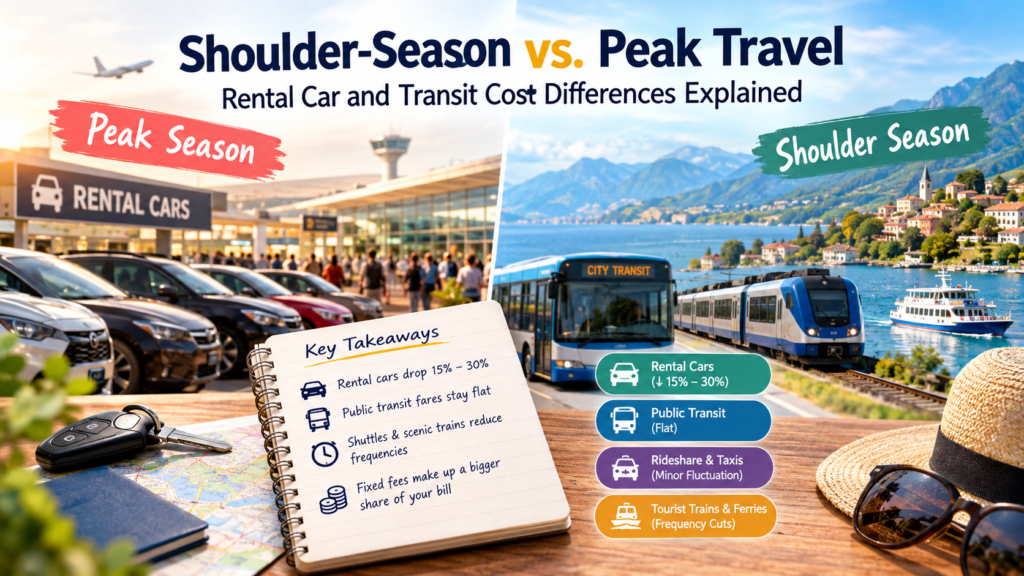
Key Takeaways: Ground Transport Pricing Realities
- Fleet Oversupply Drives Rental Drops: Rental car agencies maintain large fleets for peak summer demand. In shoulder season, unrented vehicles sit idle, pushing base daily rates down by 15% to 30%.
- Public Transit Rates Stay Flat: Metro and city bus passes are priced for local residents, meaning ticket prices remain constant regardless of tourist seasons.
- The Schedule Trap: While public transit fares don’t change, tourist-oriented shuttles, scenic regional trains, and island ferries frequently reduce daily operating frequencies.
- The Add-On Math Trap: While the vehicle base rate drops, fixed fees (car insurance, child seats, GPS) stay static, making up a larger percentage of your total bill.
While airfare algorithms and hotel rate fluctuations receive the lion’s share of travel coverage, ground transportation follows an entirely different economic logic once peak season winds down. How you move between cities, explore rural attractions, or commute across metropolitan areas can alter your overall travel budget just as significantly as your flight or hotel room.
Unlike airlines that can cancel empty flights or consolidate routes, rental car agencies cannot easily shrink their vehicle fleets overnight. An idle rental vehicle parked on an airport lot represents pure financial loss. Conversely, municipal train and bus networks operate around resident commuter patterns rather than vacationers. Understanding these opposing mechanics is essential for building an accurate ground transport budget.
Shoulder-Season Cost Behavior by Transportation Type
Where the Real Rental Car Savings Hide
Savvy travelers know that the advertised daily rate is only part of the story. In shoulder season, car rental savings show up in three distinct operational areas that rarely exist during peak months:
1. Waived One-Way Drop Fees
During peak months, agencies charge hefty penalties to return a car at a different depot because each location hoards its own vehicles. In shoulder season, agencies balance fleet distribution, frequently waiving or dramatically reducing one-way relocation fees.
2. Elimination of Forced Upsells
When peak-season lots run out of compact economy cars, travelers are often forced to pay for gas-guzzling full-size SUVs or expensive luxury categories. In shoulder season, base classes remain well-stocked, letting you secure the exact economical car you booked.
3. Flexible Cancellation Terms
Peak demand pushes rental counters to mandate non-refundable prepay rates. In shoulder season, “pay-at-the-counter” rates match prepaid offers, giving you the freedom to cancel or rebook if an even deeper flash sale surfaces before your arrival.
The Add-On Math Trap: Watch Out for Fixed Costs
While base daily car rates decline during shoulder season, optional extras operate on rigid, year-round pricing schedules. Collision damage waivers ($25–$40/day), GPS units, infant car seats, and toll transponders maintain flat rates regardless of the season.
The Takeaway: If a base rental rate drops from $60/day to $30/day, but you still pay $35/day for counter insurance, your total percentage discount is diluted substantially. Always verify whether your personal auto policy or primary credit card auto rental coverage already covers rental damage before paying counter fees.
Public Transit in Shoulder Season: The Schedule Trade-Off
Travelers assuming public transit becomes cheaper off-season are making a common mistake. Municipal transit agencies maintain steady ticket pricing throughout the year. The genuine factor to watch is operational frequency:
- Tourist Shuttles & Hop-On Buses: Routes serving regional national parks, beach towns, and mountain viewpoints often cut daily departures from every 15 minutes to once every two hours, or shut down entirely.
- Regional Ferry Crossings: Island ferry routes frequently transition to winter schedules, leaving travelers stranded if they do not check seasonal timetable changes beforehand.
- Extended Validity Regional Rail Passes: Some regional tourism boards incentivize shoulder-season visitors by adding bonus days or expanded territorial validity to multi-day train passes. Always check regional tourism portals for off-peak pass extensions.
Recalculating Rental Car vs. Public Transit
If you decided against renting a car on a previous summer trip due to exorbitant $100+/day peak quotes, run the calculation again for your shoulder-season dates:
- With base rental rates falling into the $25–$35/day range, a rental car often beats the combined cost of public transit passes, luggage storage fees, and taxi fares for groups of two or more.
- For multi-stop rural itineraries, having a personal vehicle protects your itinerary against reduced shoulder-season bus and ferry schedules.
Frequently Asked Questions (FAQ)
1. Does rideshare pricing (Uber / Lyft) drop in the shoulder season?
Not in any predictable seasonal pattern. Rideshare algorithms price trips based on real-time driver availability, localized rush-hour traffic, airport flight banks, and bad weather rather than broad tourist calendar windows.
2. Why do rental car rates fall more sharply than hotel prices?
Fleet sizing is fixed. When tens of thousands of rental vehicles sit unrented in airport parking lots post-peak, agencies drop rates aggressively to recover base holding costs, whereas hotels can selectively close wings to control operating expenses.
3. Should I buy car rental insurance at the counter during shoulder season?
Counter insurance prices remain fixed year-round and will quickly eliminate the savings from your discounted base rate. Before paying $30+/day, check if your credit card provides primary or secondary rental collision coverage at no extra charge.
4. Are public transit passes discounted during the off-season?
Standard municipal transit passes do not drop in price because they are subsidized for daily commuters. However, certain regional tourist rail passes may include promotional bonus days or bundled museum entries during off-peak periods.