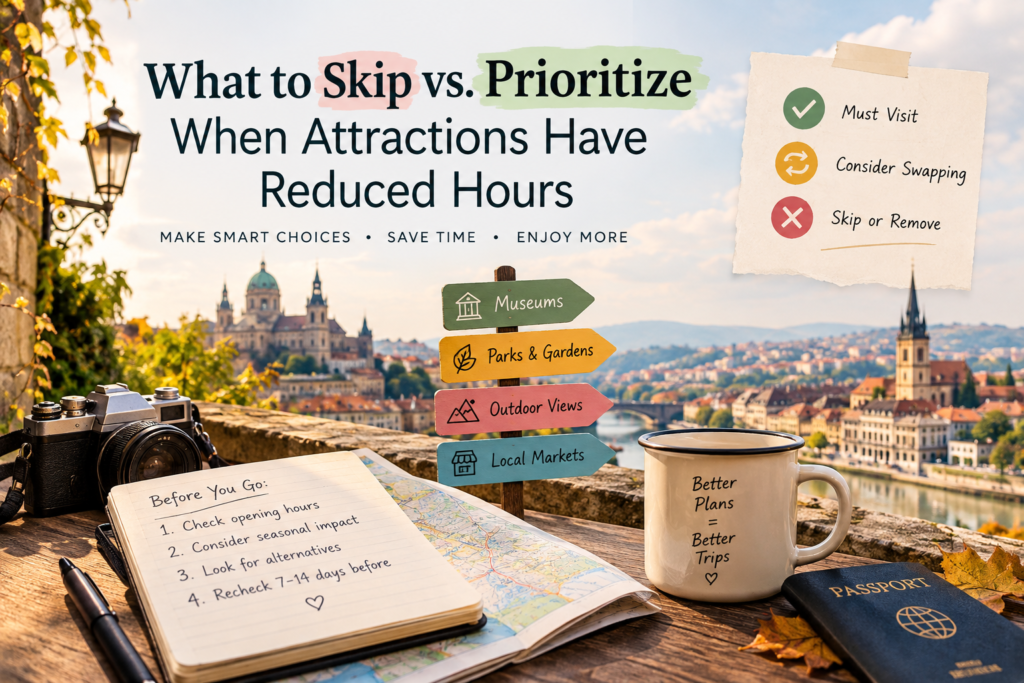
In peak travel seasons, long daylight hours and extended attraction schedules give travelers plenty of slack. If an afternoon stop takes longer than planned, you can still fit in a museum or scenic overlook before closing at 8:00 PM. In shoulder season, that slack disappears. Venues frequently shorten their operating windows to 10:00 AM – 3:30 PM, shutter completely on weekdays, or pause operations entirely. Deciding what to keep and what to cut requires a structured filtering framework rather than rushed guesswork the night before.
📋 Key Takeaways: Triage Your Shortlist
- Reduced hours do not mean reduced quality: An indoor museum open four hours a day still delivers 100% of its value—just schedule it tightly during midday.
- Filter out season-degraded stops first: A botanical garden or outdoor sunset viewpoint may be technically “open,” but if flowers are dormant or sunset coincides with dinner hours in chilly wind, the value is compromised.
- The two-pass audit: Run this filter once during initial planning, and run it again 7 to 10 days before departure to catch unannounced staffing cutbacks.
- Use the Replaceability Test for boundary cases: If an ambiguous attraction has an indoor, weather-immune alternative nearby, swap it out without second-guessing.
The Attraction Triage Matrix
When your itinerary exceeds the daylight and operating hours available, sort every intended stop into one of these four operational categories:
The 3-Question Decision Framework
When reviewing your vacation shortlist, run each prospective attraction through these three sequential questions:
1. Is it physically open during your travel week?
Many summer operations shut their doors right after Labor Day or late October. Check the attraction’s direct portal—not general travel blogs. If it is seasonally paused, remove it from your notes immediately so it does not distract your planning.
2. Does the core appeal depend on summer conditions?
A coastal terrace cafe known for evening sunset views loses its primary charm when evening temperatures hover near 8°C with gusting winds. If the reason people visit is diminished by weather, move it down your list.
3. Does a weather-resilient substitute exist nearby?
If a scenic mountain cable car is running on irregular wind-dependent departures, replace it with a historic abbey, covered arcade, or local thermal bath that operates predictably in rain or shine.
A Real-World Triage Example
Consider a traveler heading to a coastal European destination in late October with four prospective stops on their Day 2 shortlist:
- Seasonal Harbor Cruise: The operator has paused commercial sailings until April. Verdict: Cut immediately.
- Cliffside Sunset Viewpoint: Sunset occurs at 5:15 PM in biting wind, directly overlapping with local dinner openings. Verdict: Deprioritize or shift to a quick 2:00 PM daylight stroll.
- Municipal Art & History Museum: Operating hours are reduced from 9:00 AM – 7:00 PM down to 10:30 AM – 3:30 PM, but all interior galleries and audio tours remain fully accessible. Verdict: Prioritize as the core midday centerpiece.
- Traditional Neighborhood Bakery & Market: Operates year-round for locals from 7:30 AM. Verdict: Lock in as the reliable morning anchor before museum doors open.
⚠️ The Replaceability Test for Ambiguous Stops
When an attraction sits on the fence—partially open with unpredictable weather risks—ask: Is this experience unique to this destination, or easily replaceable? If it is a generic open-air overlook, swap it for a sheltered historical cloister. But if it is an irreplaceable regional landmark (such as a world-renowned ancient ruin), keep it on the itinerary, but prepare an immediate indoor backup plan for that exact time slot.
Frequently Asked Questions
Should I automatically cut any venue that announces reduced hours?
No. Reduced hours simply require tighter scheduling. If a world-class gallery operates from 10:00 AM to 3:00 PM instead of 8:00 PM, the collection inside is just as rewarding. The only attractions you should discard are those where the season degrades the experience itself (such as dormant gardens or outdoor water activities).
When is the best time to verify final off-season operating schedules?
Conduct your final verification between 7 and 14 days before your trip. Early seasonal forecasts published in summer often change based on real-time autumn staffing, local heating schedules, or municipal maintenance budgets. Checking directly on official venue channels right before departure catches these adjustments.
How should I handle disagreements with travel companions when trimming the itinerary?
Review the 3-question framework together as a group before departure. When everyone understands that a venue closes at 3:00 PM or that daylight ends by 5:00 PM, cuts feel like logical time management rather than one person arbitrarily canceling someone else’s preferred stop.
Are outdoor markets reliable in shoulder season?
Food markets and resident-focused grocery squares operate year-round, making them dependable anchors. However, tourist craft markets and flea fairs frequently reduce their schedules from daily operations to weekend mornings only, or shut down entirely until holiday Christmas markets begin.